

Everything’s bigger in Texas—except our transit vision
Texas is growing faster than its roads can handle, and Texans are paying the price in traffic and lost time. Investing in affordable rail transit can change that.


“Everything is bigger in Texas” is how the old saying goes, except for our thinking, apparently. For decades, Texans have complained about heavy traffic and gridlock affecting nearly every metropolitan area, especially along the I-35 corridor between San Antonio and Austin. But the solution to this problem is not more highway expansions or toll roads, it’s affordable rail transit.
Trains are designed to move a large amount of people in a cost-effective and efficient way. However, right now in the Lone Star State, the only intercity rail network that exists is Amtrak. Unfortunately, Amtrak in Texas mainly serves as a transit method for long-haul travel between states, rather than an efficient system to move Texans from city to city. This problem stems from the fact that Texas Republicans have not prioritized rail travel, in fact, most are openly hostile to Amtrak and rail transit more broadly.
The Passenger Rail Investment and Improvement Act of 2008 (PRIIA) explicitly prevents Amtrak from funding routes that are less than 750 miles long and defines anything less as “state-supported” routes. This means, for example, that Amtrak cannot fund a new connection between Dallas and Houston (the two largest metropolitan areas in the state) without state funding. Nor can Amtrak fund additional trains to serve existing routes like the one between San Antonio and Austin.
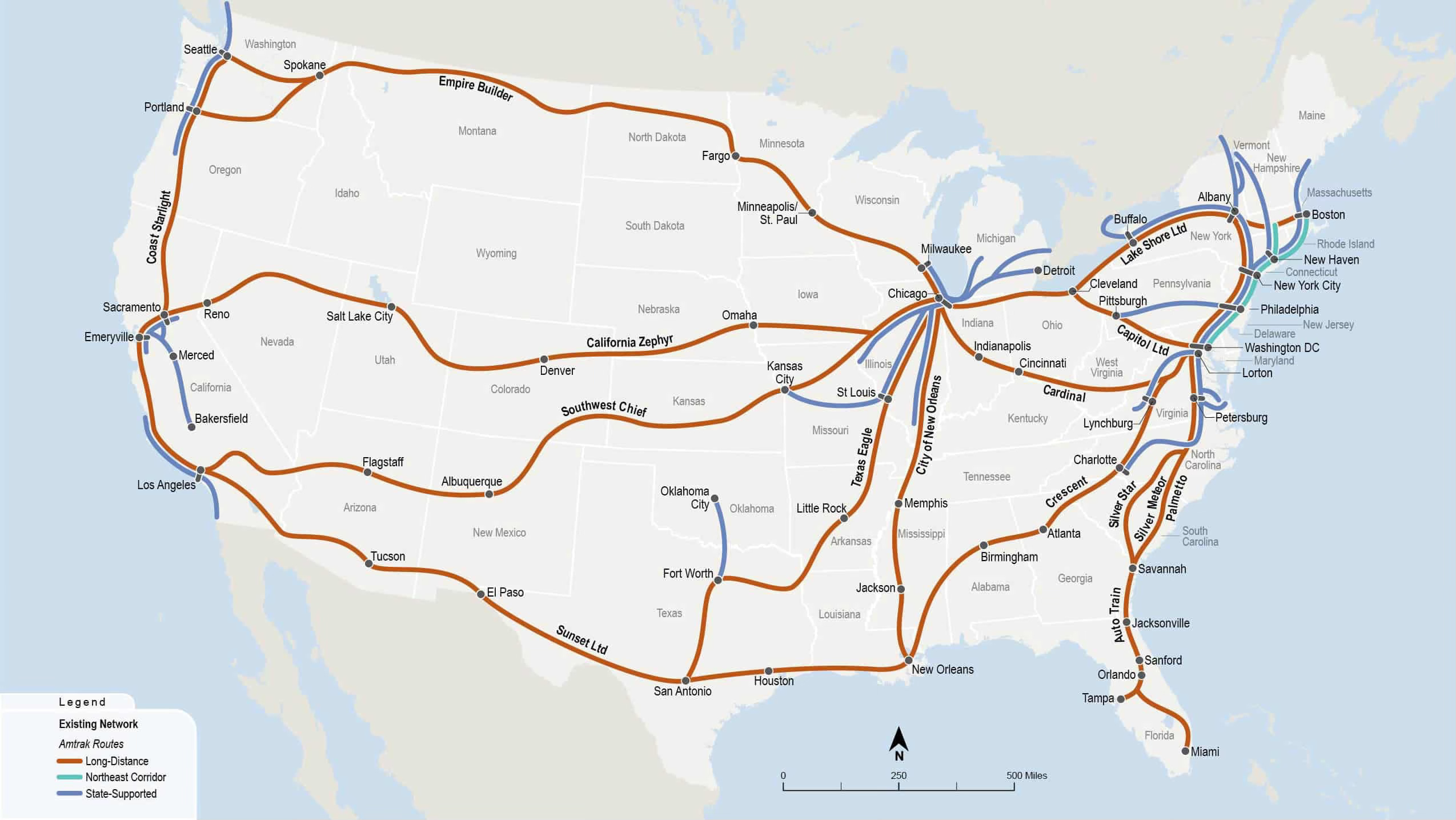
States like California, Oregon, Virginia, and Washington (among others) have invested in their own Amtrak networks to produce these state-supported spinoff services. This provides local residents with new state-supported routes to efficiently travel within the state without having to worry about driving or paying for an expensive and environmentally destructive flight.
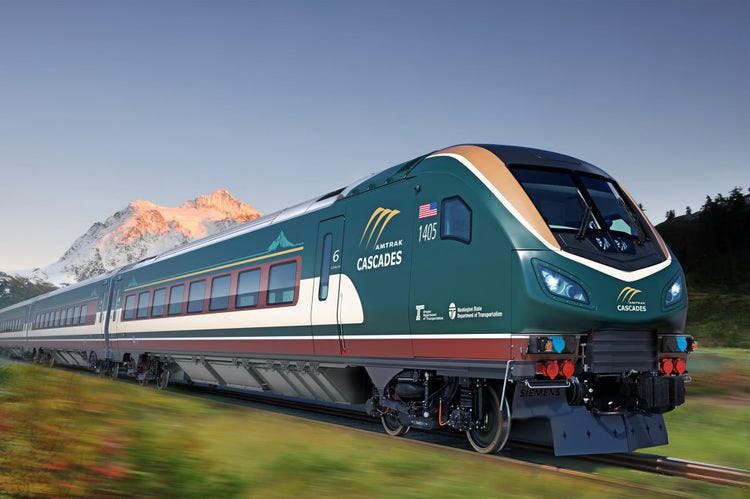
While these Amtrak state-supported routes are good at moving people from city to city, they still lag behind other developed nations in terms of speed. Other countries like China, Germany, and Japan have invested in high-speed rail, which can significantly reduce the travel time between cities and, in the case of Europe, between countries.
Seeing the success of these high-speed rail systems across the world, a group of Texas investors saw an opportunity to create the state’s first high-speed rail system with an initial route connecting Dallas and Houston. The project, known as Texas Central Railway, raised significant amounts of money, however, the state’s Republican political leaders treated the project with animosity. As a result, Texas Central Railway used most of their initial funding on costly legal battles. With the issue eventually reaching the Texas Supreme Court, the company was finally cleared to use eminent domain for land acquisitions and begin construction on the tracks, but by this point most funding had dried up and the state was completely uninterested in any sort of partnership for the project.
Seeing the failure of this project, Amtrak under President Joe Biden, sought a partnership with Texas Central Railway, but this plan was quickly scrapped following Donald Trump’s return to the White House. Now, Texas Central Railway behaves more like an advocacy group rather than a private rail company. The group has subsequently stopped posting on social media and the last media update on their website is from 2023.
The failure of this project is just another example of how irresponsible Texas Republicans have been at managing growth throughout the state. Whether it’s private rail projects or a state partnership with Amtrak, Texas Republicans seem committed to keeping Texans reliant on highway travel and expensive short-haul flights.